

Quick Summary
Discover the best AI tools for blogging in 2026. Compare ChatGPT, Jasper, Copy.ai, Surfer SEO, Frase, and Claude to find the right solution for content creation, SEO, and marketing. This quick guide helps you choose the best tool based on your workflow and goals.
Introduction
AI writing tools have evolved into essential companions for modern content creation. These platforms use advanced language models to help users generate, edit, and optimize text quickly and efficiently. From drafting blog posts to refining marketing copy, they reduce the time and effort required to produce high-quality content.
They are widely used by bloggers, marketers, businesses, and content creators who need to scale production without sacrificing clarity or consistency. Whether you are managing a niche blog or running a content-driven business, AI tools can support research, ideation, and writing workflows in a practical way.
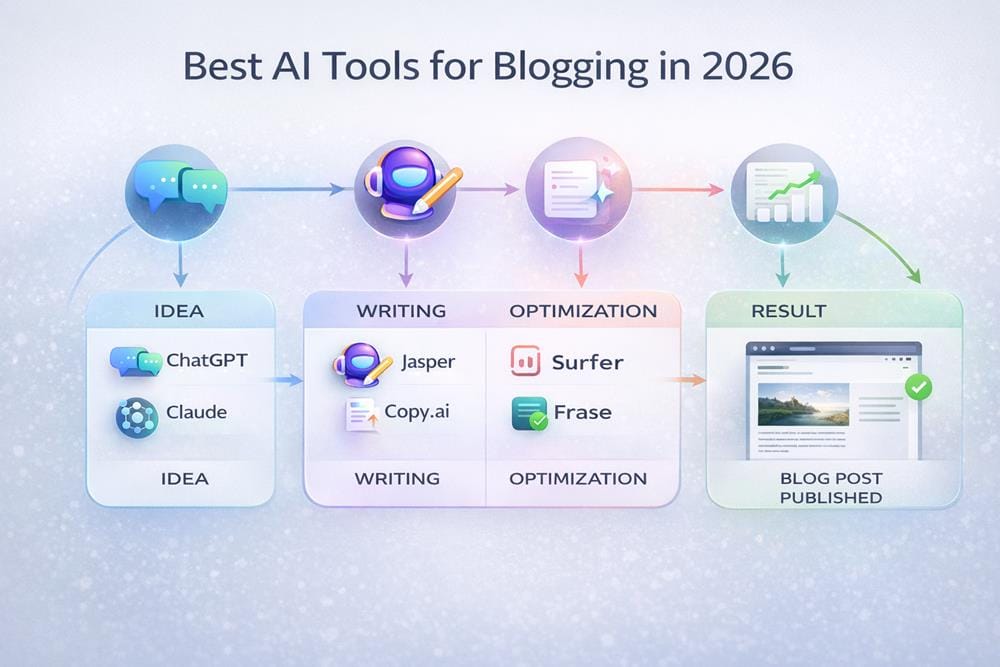
Quick List of the Best AI Writing Tools
- ChatGPT — Best for versatile, all-purpose content creation
- Jasper — Best for marketing teams and brand-focused content
- Copy.ai — Best for quick copy and idea generation
- Surfer SEO — Best for SEO-optimized blog writing
- Frase — Best for research-driven content workflows
- Claude — Best for long-form writing and thoughtful content
Comparison Table
| Tool | Best For | Free Plan | Starting Price |
|---|---|---|---|
| ChatGPT | General writing and versatility | Yes | ~$20/month |
| Jasper | Marketing and brand content | No | ~$39/month |
| Copy.ai | Quick copy generation | Yes | ~$36/month |
| Surfer SEO | SEO-focused content optimization | No | ~$59/month |
| Frase | Content research and briefs | Limited | ~$45/month |
| Claude | Long-form and contextual writing | Yes | ~$20/month |
Tool Summaries
ChatGPT
ChatGPT is one of the most flexible AI writing tools available. It can handle a wide range of tasks, from brainstorming blog ideas to drafting full articles and editing existing content. Its conversational interface makes it easy to refine outputs step by step.
It works well for bloggers who want a single tool to support multiple stages of content creation. While it may require some guidance to produce highly structured SEO content, it remains a strong all-around option. Visit our ChatGPT full review.
Jasper
Jasper is designed with marketing teams in mind. It focuses on producing brand-consistent content and offers templates tailored to advertising, email campaigns, and blog writing.
This tool is particularly useful for businesses that need to maintain a consistent tone across multiple channels. While it is less flexible than general-purpose tools, it provides a more guided experience for marketing-driven workflows. Don’t miss our Jasper review.
Copy.ai
Copy.ai is built for speed and simplicity. It excels at generating short-form content such as headlines, product descriptions, and social media posts.
For bloggers, it can be useful during the ideation phase or when creating supporting content. However, it is less suited for complex or long-form articles compared to other tools on this list. Find more information in this Copy.ai review.
Surfer SEO
Surfer SEO is not a traditional writing tool but a powerful optimization platform. It helps users create content that aligns with search engine requirements by analyzing top-ranking pages and suggesting improvements.
It is best used alongside another writing tool. Bloggers who prioritize organic traffic will find it valuable for structuring and refining content based on SEO data.
Frase
Frase focuses on research and content planning. It helps users build content briefs, analyze competitors, and generate structured outlines before writing begins.
This makes it particularly useful for bloggers who want a more data-driven approach to content creation. While it includes writing features, its main strength lies in preparation and strategy. For more details, check out our full Surfer SEO review.
Claude
Claude is known for its ability to handle long-form content and maintain coherence across extended pieces. It is well-suited for thoughtful articles, guides, and narrative-style writing.
Its strength lies in producing more natural and context-aware text. For bloggers who prioritize readability and depth, Claude can be a strong alternative to more marketing-focused tools. You can read our Claude’s review for more information.
How to Choose the Right AI Writing Tool
Choosing the right AI writing tool depends on your specific needs and workflow.
Budget is often the first factor. Some tools offer free plans with limitations, while others require a monthly subscription. If you are just starting, a free or lower-cost option like ChatGPT or Copy.ai may be sufficient.
Content type also plays a key role. For short-form content such as ads or social media posts, tools like Copy.ai are efficient. For long-form blog articles, ChatGPT or Claude are more suitable.
Marketing vs creative writing is another consideration. Jasper is tailored for structured marketing content, while Claude and ChatGPT provide more flexibility for creative or editorial writing.
SEO needs should not be overlooked. If your goal is to rank on search engines, tools like Surfer SEO and Frase can complement your writing process by providing data-driven guidance.
In many cases, the best approach is to combine tools. For example, you might use ChatGPT for drafting and Surfer SEO for optimization.
Final Verdict
There is no single best AI writing tool for everyone. The right choice depends on how you create content and what you prioritize.
ChatGPT remains the most versatile option for general blogging needs. Jasper is a strong choice for marketing-focused teams, while Copy.ai works well for quick content generation. For SEO-driven workflows, Surfer SEO and Frase provide valuable insights. Claude stands out for long-form and more natural writing.
If you are serious about improving your blogging workflow, it is worth exploring detailed reviews of each tool. Understanding their strengths and limitations will help you build a setup that fits your goals.