
Overview
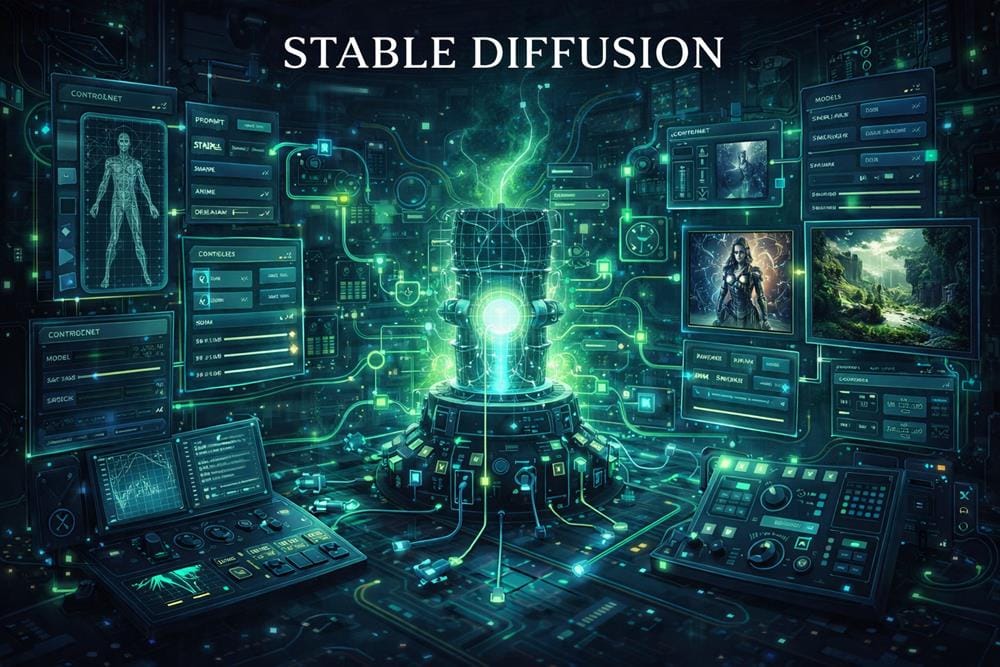
Stable Diffusion is an open image generation ecosystem that enables users to create, customize, and deploy text-to-image workflows across a wide range of tools and environments. Unlike many closed AI platforms, it is designed to be flexible and extensible, allowing users to run models locally, integrate them into applications, or access them through third-party interfaces.
The platform is widely used by developers, advanced creators, and technical users who want greater control over how images are generated. Instead of relying on a single interface, it can be accessed through multiple frontends, including web apps, APIs, and local installations. This makes it adaptable to different workflows, from experimentation to production use.
One of the key characteristics of the tool is its openness. Users can fine-tune models, adjust parameters, and modify workflows to suit specific needs. This level of customization is particularly valuable for those who require consistent outputs or want to develop specialized visual styles.
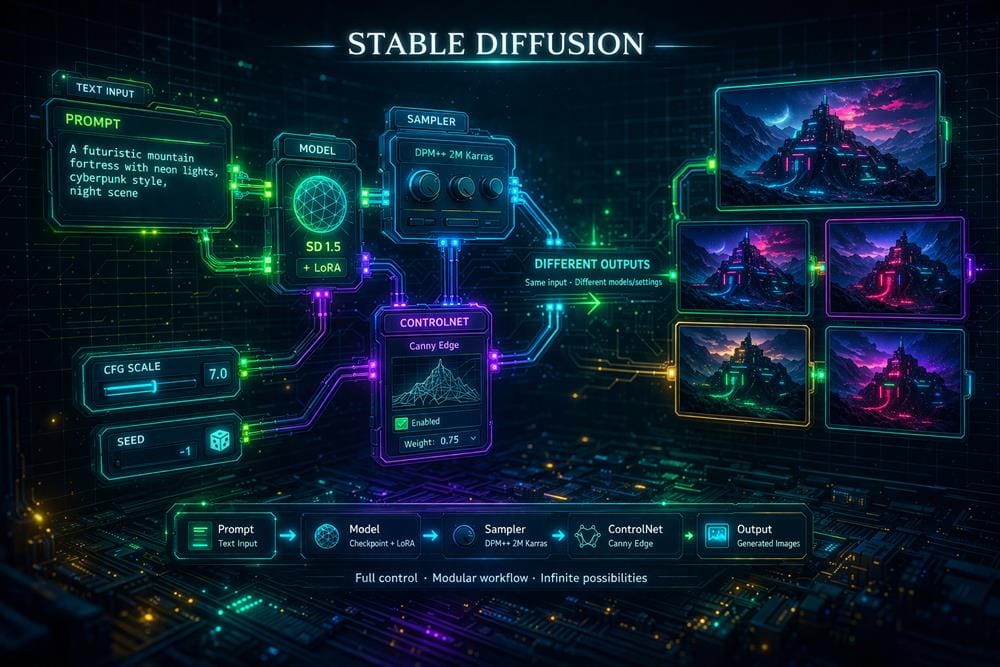
The system supports text-to-image generation based on prompts, similar to other tools in this category. However, it goes further by allowing users to control aspects such as sampling methods, guidance scales, and model checkpoints. These options provide more granular control over the final output, though they may require a learning curve.
Another important aspect is the ability to run the tool locally. Users with the appropriate hardware can install and operate models on their own machines, which can be beneficial for privacy, cost control, and performance. Alternatively, hosted solutions are available for users who prefer not to manage infrastructure.
The platform is also widely used for experimentation and community-driven development. A large ecosystem of plugins, custom models, and extensions has emerged, enabling users to expand its capabilities beyond basic image generation.
However, the flexibility of the tool comes with added complexity. Compared to more user-friendly platforms, it requires a deeper understanding of how image generation models work. Beginners may find the setup and configuration process more challenging.
Overall, Stable Diffusion positions itself as a highly customizable and open solution for image generation, offering more control and flexibility than most closed platforms.
Key Features
- Open and customizable ecosystem – Extend and modify workflows with custom models, plugins, and integrations.
- Text-to-image generation – Create images from prompts with detailed parameter control.
- Fine-tuning and model control – Adjust models and settings to achieve specific styles or outputs.
- Local and hosted deployment – Run models on local hardware or use cloud-based environments.
Pricing
The platform itself is free to use, particularly when running models locally or using open-source implementations, though costs may arise from hardware, cloud services, or third-party tools.
A free option is available, especially for users who choose to install and run the models independently.
Who Should Use This Tool
Stable Diffusion is best suited for users who want flexibility, customization, and control over their image generation workflows.
Developers are one of the primary audiences. They can integrate the platform into applications, build custom pipelines, and experiment with different model configurations.
Advanced users and technical creators may benefit from the ability to fine-tune models and control generation parameters. This allows for more precise and consistent outputs.
Digital artists and creators who want to experiment with custom styles or build unique workflows can use the platform to push beyond standard image generation capabilities.
AI researchers and hobbyists can explore model behavior, test new approaches, and contribute to community-driven improvements.
Startups and product teams may also use the platform to build custom image generation features without relying on closed systems.
However, users who prefer a simple, ready-to-use interface may find the platform more complex than necessary. It is not primarily designed for quick, one-click image generation.
Overall, the tool is most valuable for users who are comfortable working with technical systems and want full control over how images are generated and deployed.
Final Verdict
Stable Diffusion performs well as a flexible and customizable image generation ecosystem. Its open nature, support for local deployment, and ability to fine-tune models make it a strong option for users who need control and adaptability in their workflows.
Developers, advanced users, and creators who want to build or customize image generation systems are the users most likely to benefit from this platform.